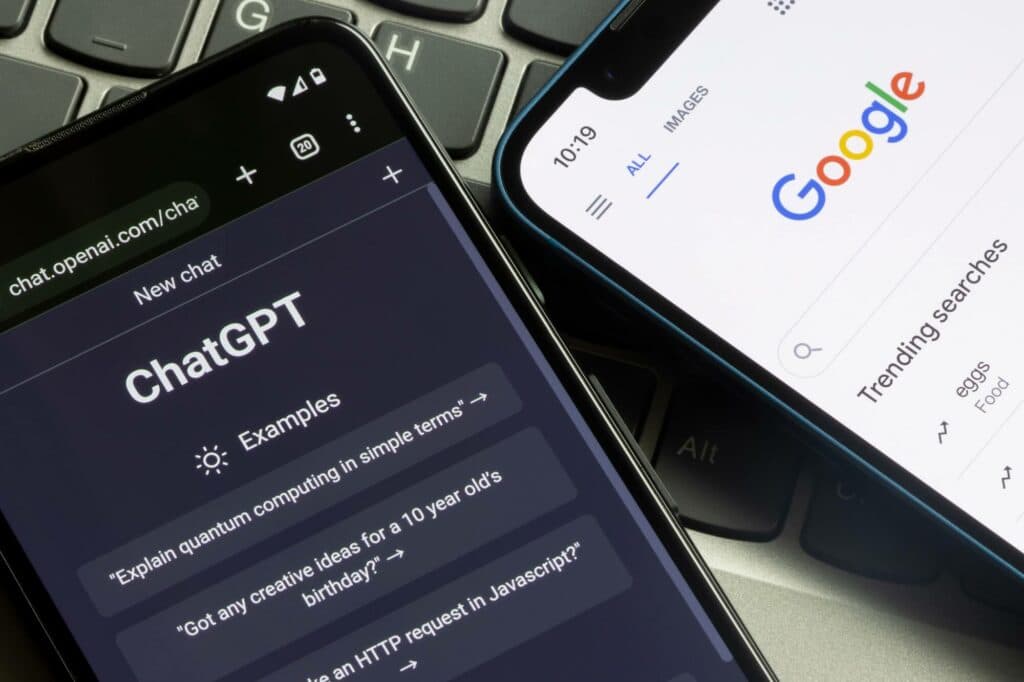
ChatGPT now handles a meaningful share of the questions that used to start with a Google search. Hundreds of millions of weekly users now ask it for recommendations — for restaurants, clinics, dealerships, hotels, financial advisers. When it answers, it usually names two or three businesses. The mechanics of which two or three are not obvious from the customer side, and they are different enough from classic search that operators applying the old SEO playbook are systematically losing.
Here is what is actually happening, and what the levers are.
Training knowledge plus real-time grounding
ChatGPT does two things at once when it answers a recommendation question. It pulls on what it learned during training, which captures the general shape of a category and the well-known brands in it. And, for any query where freshness or specificity matters, it grounds the answer in real-time information retrieved from a curated set of trusted web sources. The second step is where most operators have the most room to influence the answer.
Which sources count as trusted varies by category. For UK hospitality, it tends to be Conde Nast Traveller, TripAdvisor, The Telegraph travel section, Google Maps and a small number of regional press outlets. For healthcare, it is Google, Doctify and category-specific directories alongside Trustpilot. The grounding sources are the leverage.
Citation footprint is the new SEO
Classic SEO optimises a single domain to rank its pages on Google. The AI search equivalent is wider and harder: a brand has to appear, repeatedly, across the third-party sources the model already trusts. A piece of coverage in a publication the model treats as authoritative is worth, in citation terms, vastly more than a self-published blog post on the brand's own site.
Which is why the operators who win AI search visibility tend to be the ones who treat third-party PR and editorial placements as a deliberate, ongoing programme rather than an opportunistic exercise.
Ready to turn your reputation — and your business — around?
Get a free, confidential audit of how your business appears to customers across Google, review platforms, and AI assistants — and a plain-language plan for what we will fix first.
Reviews and freshness do the rest
Even when ChatGPT's answer is grounded primarily in editorial sources, the model checks review platforms for sentiment and volume to filter or rank candidates. A clinic that is well-cited in editorial but has a 3.8 average on Google with stale reviews will often be quietly dropped from the answer in favour of a slightly less-cited competitor with stronger live reviews.
Which means review programmes and citation programmes are not alternatives in AI search — they are complementary. The brands that lead are running both in parallel.
AI search visibility is our expertise
We measure your brand's share of ChatGPT, Gemini, Perplexity and Google AI Overview answers across the queries that matter for your category and your locations. We close the gap with editorial placements, multilingual reviews, and structured data your business actually controls.
Free 7-page audit at the start. 90-day money-back guarantee on the metrics we agree. The outcome is your brand named in the answer the customer reads.
Key takeaways
- ChatGPT's recommendation answers blend training-data knowledge with real-time web grounding from a small, trusted set of sources.
- The web grounding step is where the citation game is won — which third-party publications and review platforms the model trusts in your category.
- Review volume and freshness on the platforms ChatGPT cites (especially Google, Trustpilot, TripAdvisor) directly affect how often you are named.
- Multilingual presence matters because the model adjusts answers to the language the user is asking in.
- Static SEO content rarely surfaces in ChatGPT answers. The model rewards explicit, structured, recent third-party validation.
- Operators who invest in citation authority alongside reviews and structured data see their brand named in ChatGPT answers within weeks.