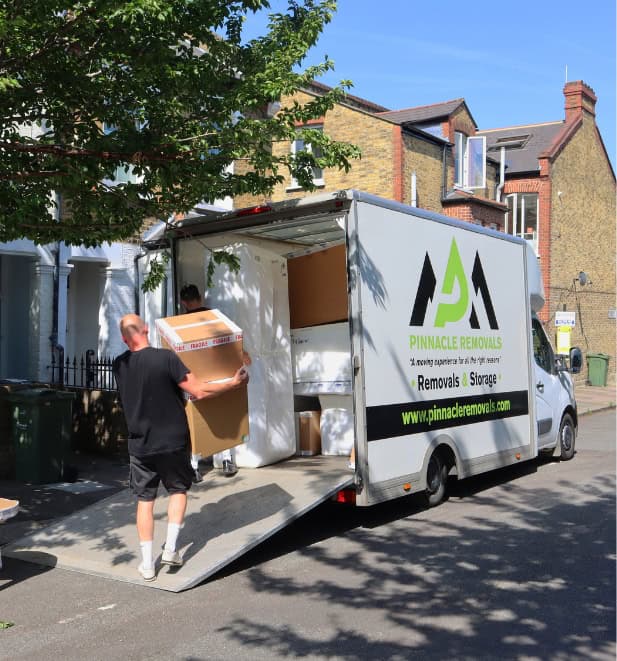
Moving house is one of the highest-trust transactions a UK family ever makes. They are handing strangers the keys to their home, the contents of their wardrobes, their children's belongings, irreplaceable family items, and — for many — the entire material weight of a relocation to a new town or city. The cost of getting it wrong is not a refund. It is broken heirlooms, missing electronics, and the family's first week in a new property spent arguing with a removals company about a damage claim.
Families know this. They do not book a UK removals company impulsively. They spend two or three days reading Google reviews, scrolling Reference Line and Mumsnet threads, checking Trustpilot, and asking neighbours and estate agents for recommendations before they hand the keys to anyone. The mover who wins the booking is the mover whose recent reviews convinced the family the day will be smooth. The mover who loses it is the mover whose last six months of reviews mentioned a broken TV, a missing box or a final invoice that was £400 higher than the quote.
Removals is a one-shot trust decision
Most service businesses get a second chance. A restaurant that disappoints can win the diner back next month. A salon that messes up a colour can correct it the following week. A removals company does not get that chance. The customer is handing over every belonging they own, on a single day, to a team they have never met. If anything goes wrong — a broken sofa, a missing box of children's photos, a price that doubled on the day — that family will never use the company again, and they will tell everyone they know.
That structural reality is why reviews carry more weight in removals than in almost any other category. The family is not buying a service experience they can sample. They are buying the absence of disaster. The only proxy for that absence is the recent reviews from other families who have already taken the same risk and either escaped clean or did not.
Where the shortlist is actually built in the UK
UK removals shortlists are not built from Google Ads or from your website. They are built from three places: the local Google Map pack for 'removals near me' or 'house movers [town]', the British Association of Removers directory for the senior end of the market, and Trustpilot or Mumsnet for the family-recommendation channel. The customer typically arrives at two or three names and contacts only those.
What removes a mover from that shortlist is unforgiving. A recent one-star review mentioning damaged furniture. A complaint about a price that ballooned on the day. A photo of items left behind in the old property. A response from the company arguing with the customer in public rather than resolving the issue. Any one of these in the visible recent reviews is usually enough — even for a mover with hundreds of older five-star reviews and full BAR membership.
Ready to turn your reputation — and your business — around?
Get a free, confidential audit of how your business appears to customers across Google, review platforms, and AI assistants — and a plain-language plan for what we will fix first.
International relocations are decided by reviews and accreditation
The international-relocation side of the UK market — UK-to-Dubai, UK-to-Australia, UK-to-Singapore moves for expats relocating for work or retirement — is even more reputation-driven. The customer is committing to a company that will pack their belongings in the UK, ship them across the world, and deliver them weeks later to a country they may already be living in. The trust required is enormous, and there is no second chance to recover a damaged shipment or a missing crate.
What corporate HR teams and expat families both filter on is the same: FIDI and BAR Overseas accreditation as the floor, and the recent Google and Trustpilot reviews as the ceiling. A mover without both is invisible to the corporate-relocation pipeline that signs the largest contracts in the UK market, and is unlikely to be on the shortlist of the senior expat families who pay self-funded for international moves.
Removals reputation is our expertise
We work with removals companies, international relocation specialists, office movers and self-storage operators across the UK, and we treat removals reputation as its own discipline. The shortlist channels that matter — Google Business Profile, the BAR directory, Trustpilot, Mumsnet, FIDI listings and the corporate-relocation procurement panels — behave differently to other categories, and the recovery playbook for each is different.
The outcome we deliver is concrete. Harmful, unfair or factually disputable reviews are challenged and removed where possible, in a way that satisfies platform policies and the CMA's 2024 guidance on fake-and-unfair reviews. A steady pipeline of recent, authentic five-star feedback comes online from the families you have just moved. The mover ranks in the top 3% of its category on Google Maps in the postcodes your sales team actually wants to win. Same vans, same crews, same equipment — a different reputation, and a quote-to-booking conversion, average ticket size and corporate-account share that all look different with it.
Key takeaways
- UK families research a removals company for an average of 2–4 days before booking. By the time they call, the shortlist is two or three movers.
- Google reviews, Trustpilot and the British Association of Removers (BAR) member directory are the three places a UK move actually gets shortlisted.
- A single recent negative review mentioning broken furniture, missing items or a price that ballooned on the day removes a mover from local consideration for months.
- International relocation bookings (UK-to-Dubai, UK-to-Australia) are decided almost entirely by Google reviews and FIDI/BAR accreditation — companies without both lose the corporate-account pipeline.
- A removals company with a strong, recent review profile commands a higher quoted price and books out three to four weeks ahead of competitors with weaker profiles.