Of every category of business in the consumer economy, restaurants have the shortest decision window. The customer is hungry. The customer is in a car. The customer has ninety seconds to choose, message the others, and book. They do not visit your website. They do not study your menu PDF. They open Google, glance at the star rating and the recent reviews, and act.
Which means that for any restaurant in Dubai, what shows on the Google profile in those ninety seconds is the entire marketing engine. Everything else — the chef hire, the room refit, the social campaign, the press cuttings — converts only through that bottleneck.
What happens inside ninety seconds
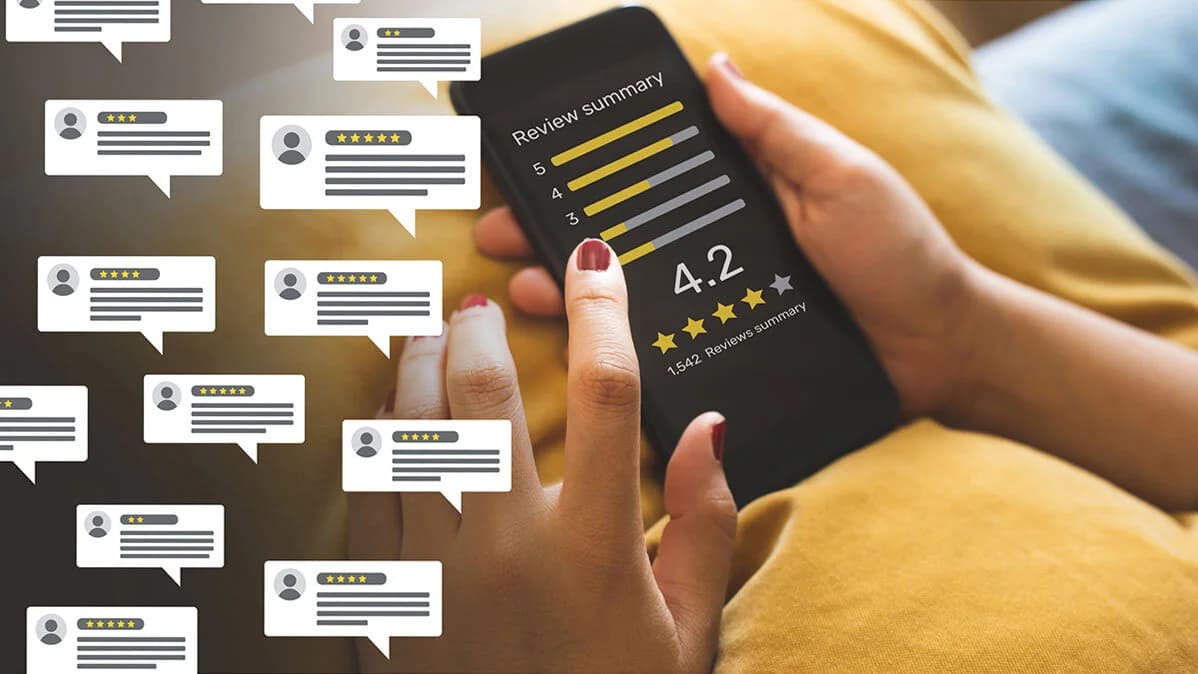
The behaviour is consistent enough to model. The customer opens Google Maps from a search like 'best Italian in Marina' or 'sushi near me'. They get a list. They tap the top two or three results. On each one, they scan four things in order: the star rating, the number of reviews, the most recent photo, and the most recent two or three reviews. That is the entire decision. They are choosing one of three options and rejecting the rest.
Everything you have spent on your brand, your menu, your room and your hire pipeline meets the customer in those four signals. The restaurant with the cleaner signals wins the table. The restaurant next door, however good its food, does not get a chance to compete on it.
Volume and freshness beat absolute rating
Operators sometimes obsess about pushing a 4.5 to a 4.7. The customer is rarely making that distinction. They are making a different one: a 4.3 with 1,200 recent reviews looks unambiguously alive. A 4.7 with 60 reviews and the most recent one from eight months ago looks suspect. The customer reads volume as proof of a steady, full restaurant. They read freshness as proof that things have not silently gone wrong recently.
Which is why the operationally correct goal in restaurant reputation is not maximum average — it is maximum velocity. A steady cadence of authentic, recent reviews from real guests, in the languages your customers use, beats any single optimisation of the average score.
Ready to turn your reputation — and your business — around?
Get a free, confidential audit of how your business appears to customers across Google, review platforms, and AI assistants — and a plain-language plan for what we will fix first.
Delivery platforms are a separate funnel
For any restaurant doing meaningful delivery volume, Deliveroo, Deliveroo, Zomato and Careem Food are not extensions of the dine-in funnel. They are a parallel storefront, with their own star rating, their own review pile, and their own customer base of decision-makers who never set foot in the restaurant. The rating in the app is the equivalent of the cover photo on a menu — it is the first and biggest signal the customer reads.
A 3.9 average on Deliveroo for a restaurant doing 200 orders a week is not a small problem. It is the difference between 200 and 350 orders. The reputation work for delivery is operationally distinct from the dine-in work, and worth running explicitly.
Restaurant reputation is our expertise
We work with independent restaurants, restaurant groups, cafés and dark-kitchen operators across the UK. We run the multilingual review-request workflow timed to the moment guests are happiest, the 48-hour response SLA on every review across Google, TripAdvisor and the delivery platforms, and the citation and press placements that move both Google rank and AI Overview answers.
The outcome is more covers, higher delivery volume, and a category position that compounds month over month. Same kitchen, same menu, same team — different reputation, different P&L. Free 7-page audit, 90-day money-back guarantee on the metrics we agree at the start.
Key takeaways
- Restaurant decisions are made in under 90 seconds on a phone — there is no time for a website visit.
- Star rating, photo carousel, recent review tone, and replies to negative comments are the only signals that get read.
- A 4.3 with 1,200 recent reviews outperforms a 4.7 with 60. Volume and freshness beat absolute rating.
- Deliveroo, Deliveroo and Zomato ratings act as a separate funnel — they are effectively your delivery menu's cover photo.
- A single visible bad review about hygiene, slow service or a billing surprise can move dozens of covers a week.
- Reputation runs the cover count. The chef does not.